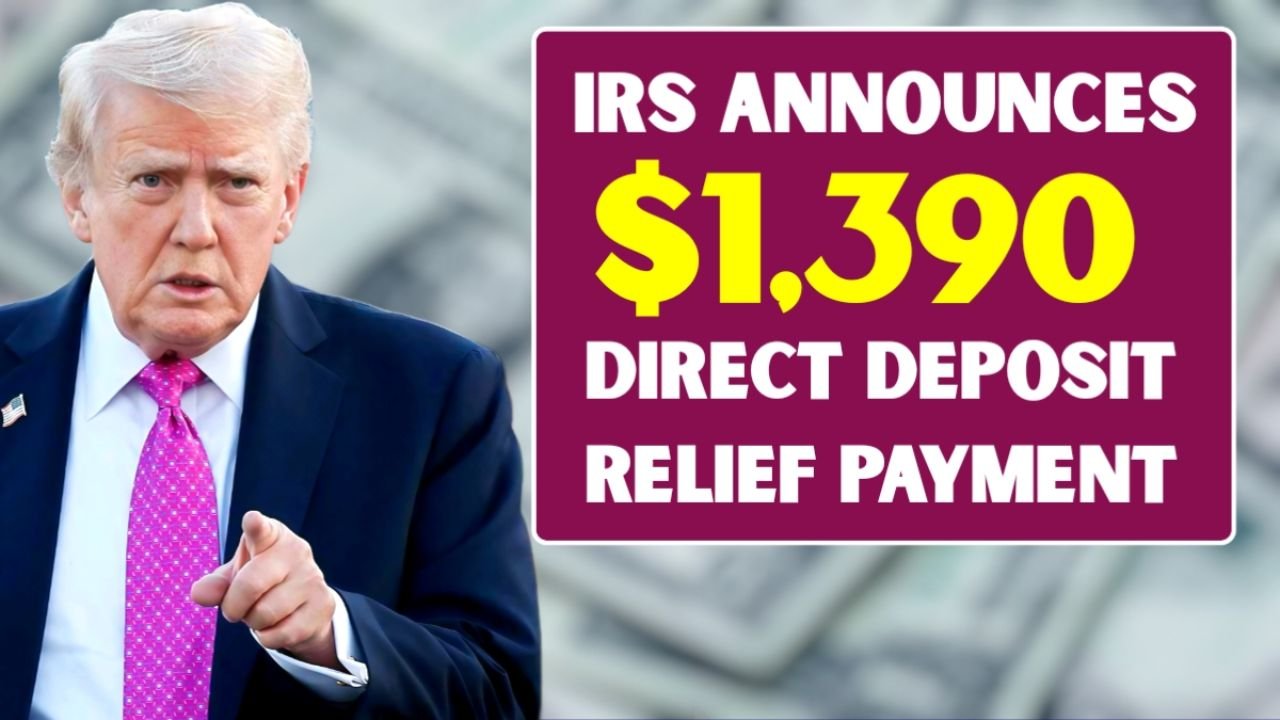

As 2025 approaches its final weeks, millions of Americans continue to feel the pressure of rising living costs. Even though inflation has slowed compared to previous years, everyday expenses such as groceries, rent, healthcare, and winter utility bills remain stubbornly high. December, in particular, is a financially demanding month due to heating costs, holiday spending, and year-end obligations.
Against this backdrop, discussions around a proposed $1390 Direct Deposit relief payment for December 2025 have captured nationwide attention. While this payment has not yet received final approval, it is actively being discussed by policymakers as a possible year-end financial support measure. If cleared, the Internal Revenue Service (IRS) would be responsible for distributing the funds, similar to previous federal relief programs.
This article explains everything currently known about the $1390 Direct Deposit, including why it matters, who may qualify, how the IRS could distribute it, and what Americans should do now to stay prepared.
What Is the $1390 Direct Deposit Relief Payment?
The proposed $1390 Direct Deposit is a one-time federal relief payment aimed at helping Americans manage persistent cost-of-living pressures. Unlike emergency stimulus programs launched during the pandemic, this initiative is being discussed as a targeted support option rather than a universal payment.
The core idea behind the $1390 Direct Deposit is to provide short-term financial relief at a time when household budgets are stretched thin. December expenses tend to rise sharply, especially for seniors, low-income families, and individuals on fixed incomes. A single direct deposit could help cover heating bills, grocery costs, medical expenses, or outstanding balances before the new year begins.
If approved, the payment would be delivered directly to eligible recipients’ bank accounts, ensuring faster access and reduced administrative delays.
Why the $1390 Direct Deposit Matters in December 2025
Although inflation rates have cooled, prices for essential goods and services remain significantly higher than they were just a few years ago. Many Americans are still adjusting to these long-term changes, particularly those whose wages have not kept pace with rising costs.
The $1390 Direct Deposit matters because it addresses a very specific period of financial stress. During December, households often face:
-
Increased heating and electricity bills
-
Higher grocery spending
-
Medical and prescription costs
-
Travel and family-related expenses
For seniors and people with disabilities, these pressures can be even more intense. While Social Security and disability benefits receive cost-of-living adjustments, those increases often lag behind real-world expenses. A one-time $1390 Direct Deposit could help bridge that gap and provide temporary relief.
From an economic standpoint, policymakers also recognize that direct payments tend to circulate quickly through local economies. When people spend relief funds on essentials, small businesses, retailers, and service providers benefit as well.
Current Approval Status of the $1390 Direct Deposit
As of now, the $1390 Direct Deposit has not been officially approved. It remains a proposal under active discussion within federal policy circles. Lawmakers are weighing budget constraints, economic data, and public demand before making a final decision.
The IRS has not issued a formal confirmation regarding payment dates or eligibility requirements. However, the agency is technically prepared to handle distribution if approval is granted. Systems used during earlier relief programs remain in place, allowing for rapid deployment of mass direct deposits.

Until official announcements are made, it is important to treat all information about the $1390 Direct Deposit as preliminary.
Also Read – IRS Approves $2,000 Direct Deposit for December 2025 – Eligibility, Payment Dates & Full Claim Guide
Who May Qualify for the $1390 Direct Deposit?
Although eligibility rules are not finalized, early discussions suggest that qualification criteria for the $1390 Direct Deposit would closely resemble previous federal relief programs.
Likely Eligibility Factors
-
Income-based thresholds for individuals and families
-
U.S. citizens and permanent residents with valid tax records
-
Individuals who filed recent tax returns
-
People receiving federal benefits
Single filers, married couples filing jointly, and heads of household may all qualify if their income falls within approved limits. Higher-income households may receive reduced payments or may not qualify at all.
Social Security and Federal Benefit Recipients
One group expected to be prioritized for the $1390 Direct Deposit includes recipients of:
-
Social Security
-
Supplemental Security Income (SSI)
-
Social Security Disability Insurance (SSDI)
-
Veterans Affairs (VA) benefits
These individuals were prioritized in earlier relief programs because the government already maintains up-to-date records for them. If the proposal moves forward, most benefit recipients would likely receive the $1390 Direct Deposit automatically, without needing to apply.
Dependents may also be included, though the final decision on additional amounts per dependent has not yet been confirmed.
How the IRS Could Distribute the $1390 Direct Deposit
If approved in late 2025, the IRS is expected to follow a phased distribution approach for the $1390 Direct Deposit.
Phase One: Early December
-
Direct deposits to taxpayers with updated bank information
-
Fastest method of delivery

Phase Two: Mid-December
-
Paper checks mailed to eligible recipients
-
Prepaid debit cards for those without bank accounts


Phase Three: Late December to Early January
-
Corrections and reissued payments
-
Address updates and account fixes
The IRS typically prioritizes direct deposits because they are secure, efficient, and cost-effective.
What Americans Should Do Now
While waiting for official confirmation, individuals can take steps to prepare in case the $1390 Direct Deposit is approved.
1. Review Tax Filing Status
Ensure your most recent tax return is filed and processed. Unfiled returns can delay or prevent payment.
2. Update Banking Information
If you have changed banks, updating your direct deposit details with the IRS could help you receive the $1390 Direct Deposit faster.
3. Watch for Scams
The IRS will never:
-
Call or text asking for personal information
-
Request fees to release relief payments
-
Send payment links through social media
Only trust updates from official IRS and government sources.
How the $1390 Direct Deposit Compares to Past Relief Payments
The proposed $1390 Direct Deposit differs from earlier stimulus checks in several important ways:
-
It is more targeted rather than universal
-
It focuses on inflation-related pressures
-
It aims to provide seasonal, short-term relief
This approach allows lawmakers to address ongoing economic challenges without launching a broad emergency program.

Potential Economic Impact of the $1390 Direct Deposit
If approved, economists believe the $1390 Direct Deposit could have a meaningful but controlled economic impact. Rather than fueling inflation, targeted relief payments tend to help stabilize households without significantly increasing demand.
Expected benefits include:
-
Improved household financial stability
-
Reduced reliance on credit cards and loans
-
Increased spending at local businesses
-
Short-term economic support during winter months
These effects make the proposal appealing to policymakers looking for balanced solutions.
Latest Developments to Watch
Americans should closely monitor:
-
Congressional budget negotiations
-
IRS official announcements
-
Treasury Department statements
Once approval is granted, details about eligibility, payment timing, and distribution methods for the $1390 Direct Deposit will be formally released.
Disclaimer and Final Thoughts
It is important to note that the $1390 Direct Deposit has not yet been officially approved. All information presented here is based on current discussions and publicly available policy signals.
For millions of Americans, the possibility of a December relief payment offers hope during a financially demanding season. If approved, the $1390 Direct Deposit could provide timely support to households managing high costs, fixed incomes, and seasonal expenses.
Readers are strongly encouraged to follow official IRS and federal government updates for confirmed information. Until then, staying informed and prepared is the best approach as discussions continue.
2026 GMC HUMMER EV: Electric Power Meets Rugged Luxury in a Bold New Avatar
Some Important Link
| Download News APP | Click Here |
| WhatsApp Group | Click Here |
| Home Page | Click Here |